
America builds the impossible. The Interstate Highway System. A man on the moon. The internet. An electricity grid that spans the continent.
And yet, today, what feels impossible for many is the American Dream itself. At kitchen tables all across the country, the conversation is too often about real economic struggle and the fear of falling further behind. Costs are up and increasing across the board. Indebtedness is growing. Emergency savings are disappearing. Consumer confidence is down. The social safety net is being unwound. Some AI leaders and experts say out loud that the models they are building could hollow out entire sectors of the labor force.
What Americans face individually at their kitchen tables compounds into community disinvestment and disillusionment. The deal we have today is not working.
But pessimism and decline are not the American story. There is another American chapter to write: an ambitious, optimistic and abundant one that flips the American household and community from being powerless actors at the end of the line to the locus of our investment. One that gives all households a real stake in the economy of the future being built today. One that makes communities the beneficiaries of these investments and places of rebirth. One that results in shared prosperity.
This is the next great project America must undertake. We call it building Shared Power, and our dedication to making it a reality is what inspired the name of this blog.
“It turns out that the answer to both the distress and disillusionment at the kitchen table and in communities around the country and the energy system we need to power our 21st century economy lies in American households.”
For Rewiring America, the project begins with our energy system. Unprecedented load growth and infrastructure needs are projected to result in $1.4 trillion of investment over the next five years alone. Electricity is the inevitable energy of the future: for our cars, our homes, our businesses, our industry, the internet and AI. Fossil fuels, defined by volatility, scarcity, inefficiency and an economy built on extraction cannot keep up with the power demands of a 21st century economy or with the tools of electrification that only get better and cheaper. The economics are clear. Inevitably, they will win out.
The speed at which that happens, however, depends on the choices we make today. There are those vested in the status quo who have sold us a smaller story — that a decarbonized, electrified, fairer America in a better world is somehow beyond us.
But it turns out that the answer to both the distress and disillusionment at the kitchen table and in communities around the country and the energy system we need to power our 21st century economy lies in American households: treating them not as passive consumers footing the bill but as energy infrastructure and the heroes of our energy story.
This is made possible by electrification. Households are wired to one another by the largest machine on the continent: the American grid. These are the wires that bind — your connection to your neighbor, and to your fellow American. Rooftop solar, a home battery, an EV plugged into the grid — turning the household into a producer and contributor to the whole. Today, your home can make power. It can store power. It can send power back when the grid needs it most. And with more efficient equipment, it can use less power in the first place.
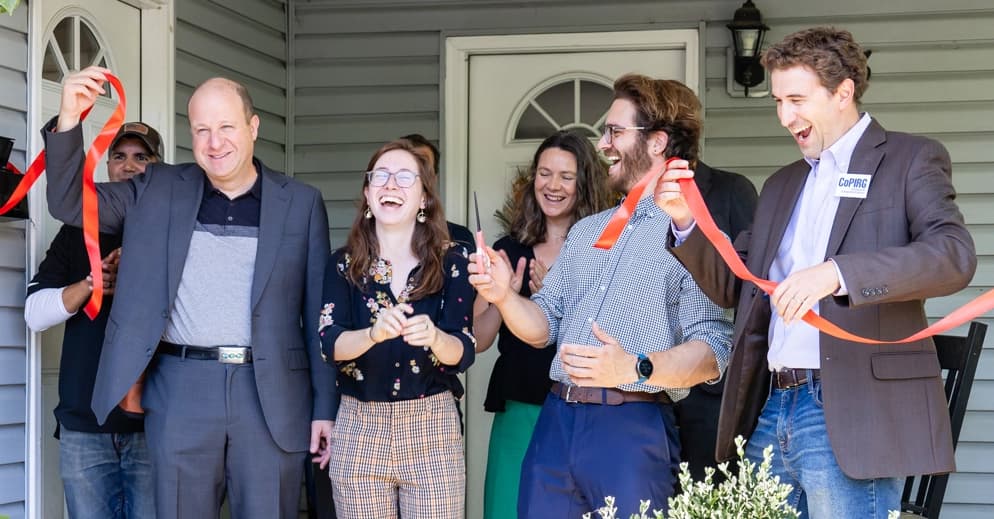
Here, in nascent form, is a new social contract that is also an economic one. Your rooftop solar can lower not just your power bill but your neighbor’s and your community’s. There will still be ribbon cuttings for large, steel-in-the-ground projects. But the installation of each electric machine in a home that lowers energy bills and increases health, comfort and safety should be understood as a ribbon cutting-worthy event in and of itself. Hundreds of billions of dollars of the trillions that will be spent on our energy system can and should be delivered through households directly.
Rewiring America’s version of the new and better story for America is one where we understand the household as part of the overall energy infrastructure. Where we make electricity so cheap that direct investments into existing technologies like rooftop solar, battery storage (EVs as well as home-based), and heat pumps become the inevitable choice. Where the household saves thousands of dollars on their energy bills starting immediately, the grid becomes more efficiently utilized and able to accommodate the necessary economic growth, and over 1 million jobs that cannot be offshored or replaced by AI are created across every community in the country. Where instead of loss and sacrifice, we share in economic growth and success.
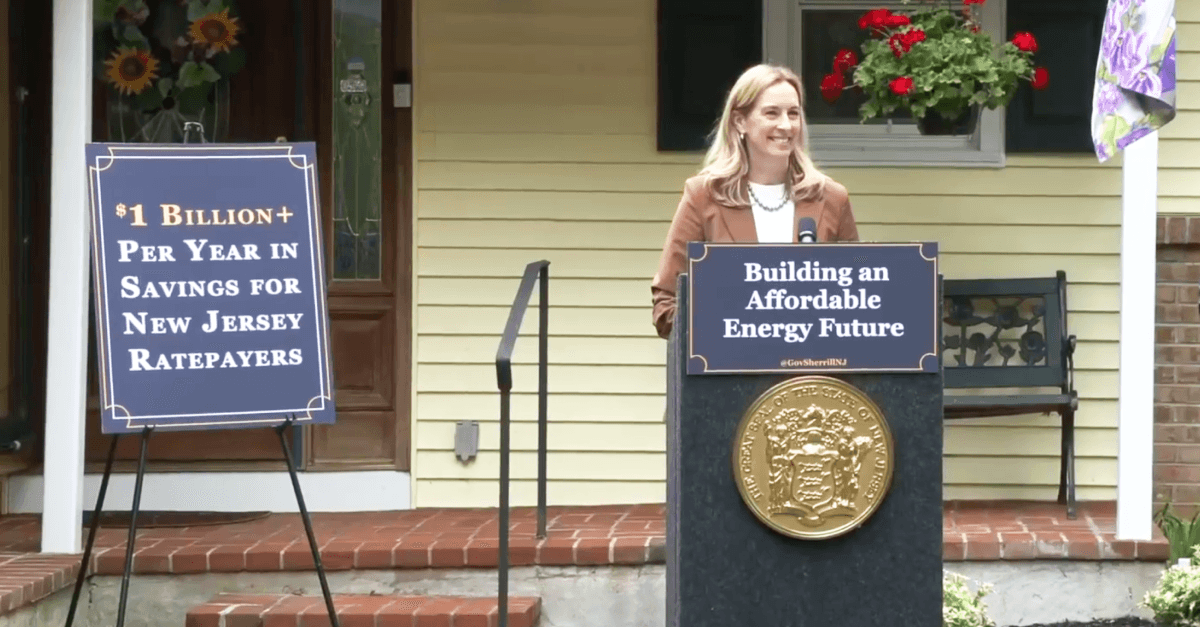
A recent bill signing by New Jersey Gov. Mikie Sherril is a perfect example of what this can look like in practice. I had the honor of serving on the transition team for Gov. Sherrill, who ran and was elected on the promise of making energy affordable for New Jersey households. And through the work of her and her entire team, that translated into something fantastic. Gov. Sherrill held a press conference for the Data Center Fair Share Act at a constituent’s front porch, and signed the act inside, at their kitchen table. This is a significant win for households: for the first time, a state has created a policy pathway for data centers to fund verified demand flexibility, including energy efficiency, demand response, behind-the-meter storage and managed electrification. That means rising electricity demand can become an opportunity to invest in homes, businesses, and communities — instead of shifting costs onto families and small businesses. When we pair actionable policy with the principle of Shared Power, we put dignity back into the household and the community.
Shared Power can help us reach our North Star to bring down the 42 percent of energy-related emissions that stem from how we heat and cool our homes, cook our food, dry our clothes, get around and how we power it all. That’s why Rewiring America’s bold thesis involves getting all of the 152 million households expected in America by 2050 to swap out their old inefficient or gas machines for 1 billion new, efficient electric ones. If we can succeed on that, we can avert the worst climate outcomes while delivering healthier, more affordable and economically resilient communities around the nation.
What would Shared Power in action look like in your community?
I’d love to continue the conversation on Linkedin.